Photo By WASSERMAN
“Blacked Out Like A Phantom, Phone Keeps Having A Tantrum…”
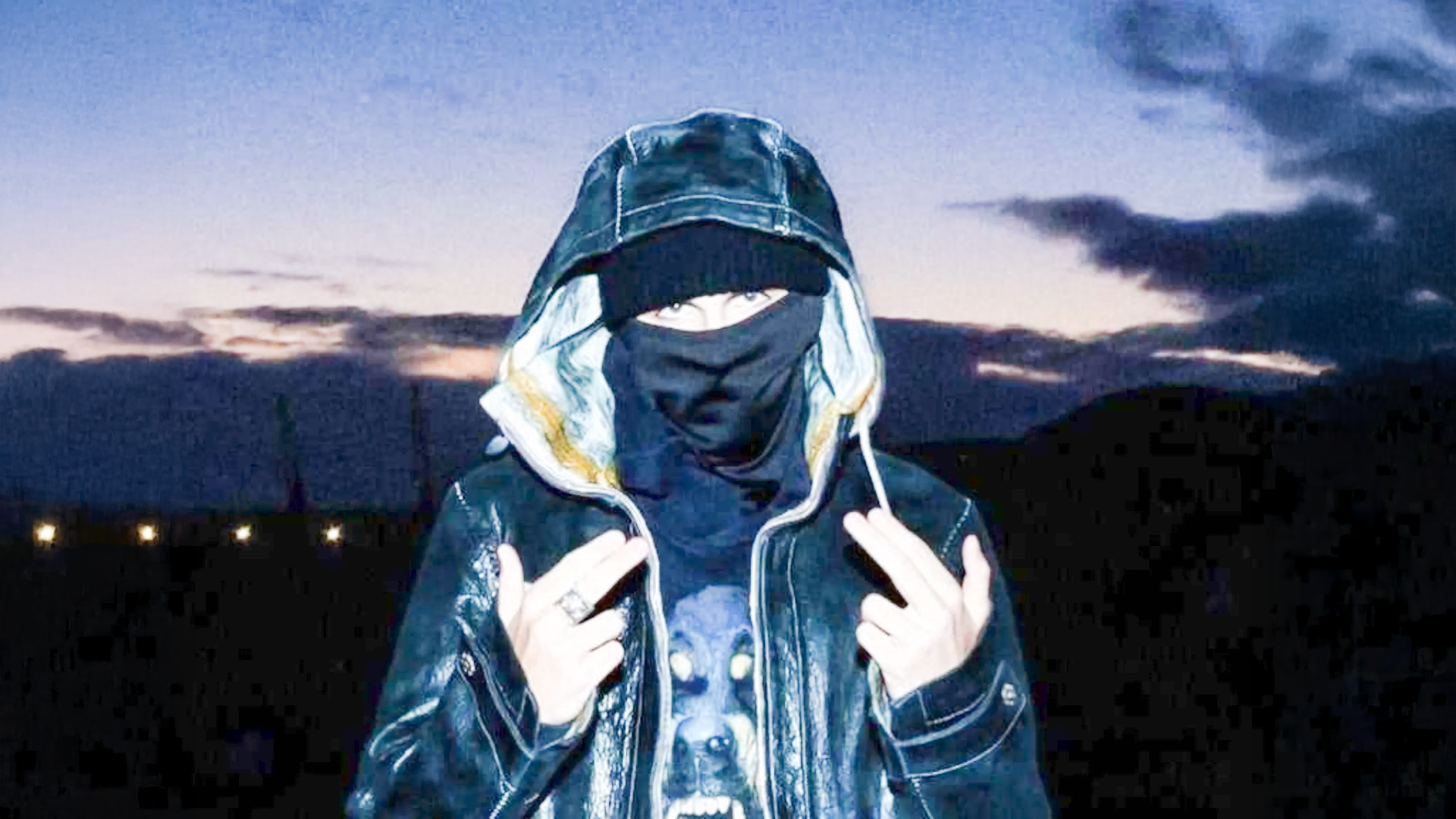
EsDeeKid operates without being seen. In 2025, that decision alone made him one of the most visible figures in UK rap. While most artists build careers by inviting audiences into their personal lives, EsDeeKid has taken the opposite approach, emerging as a masked, anonymous presence whose music travels faster than any explanation ever could. Wrapped in a balaclava and armed with a sound that feels both regional and futuristic, he has moved from underground obscurity to global recognition without ever revealing himself.
That anonymity is neither accidental nor a gimmick. His refusal to offer a traditional backstory fundamentally reshapes how audiences engage with his work. There are no interviews detailing childhood struggles, no carefully curated origin story, no emotional confessionals designed to humanize the artist behind the music. The only consistent detail is Liverpool. His Scouse accent is unmistakable, anchoring his music in a specific place and class background even as everything else remains deliberately obscured. In a genre that often relies on autobiography, EsDeeKid’s silence feels like a statement in itself.
Musically, EsDeeKid exists at a crossroads of UK rap, cloud rap, trap, and jerk-influenced rhythms, but the defining feature of his sound is restraint. His beats are minimal and atmospheric, built from heavy bass, drifting synths, and intentional emptiness that allows his voice to cut through with a detached, almost indifferent delivery. He rarely raises his voice or oversells emotion; instead, repetition, tone, and silence do the work. The result is music that feels hypnotic and tense, designed less for spectacle than immersion. In a UK rap scene long dominated by London voices, EsDeeKid refuses to neutralize his regional identity for broader appeal. He doesn’t explain his slang or soften his pronunciation—listeners adapt to him, not the other way around. That refusal to translate himself has become a strength, giving his music an immediacy and authenticity that cuts through a crowded digital landscape.
His rise was gradual rather than explosive. Early tracks circulated quietly through underground playlists, late-night YouTube recommendations, and short-form social media edits. Songs like Bally and LV Sandals laid the groundwork, but Phantom marked a turning point. Its looping structure, shadowy atmosphere, and understated menace made it endlessly replayable—perfectly suited to internet circulation without ever feeling engineered for it. Crucially, when momentum arrived, EsDeeKid didn’t pivot. The sound stayed dark, the persona stayed hidden.
That commitment fully solidified with the release of his debut album, Rebel, in June 2025. Short, intense, and uncompromising, the album feels less like an introduction and more like a manifesto. There is no filler, no crossover concession, and no attempt to explain the man behind the mask. Instead, it doubles down on indulgence, defiance, paranoia, and emotional distance. Familiar rap themes—money, nightlife, drugs, status—are treated without celebration or moral framing. Excess becomes routine rather than aspirational, creating a bleak, almost numbed honesty. Critics point to repetition; fans argue that repetition is the point. The loops mirror monotony, and the monotony mirrors real life.
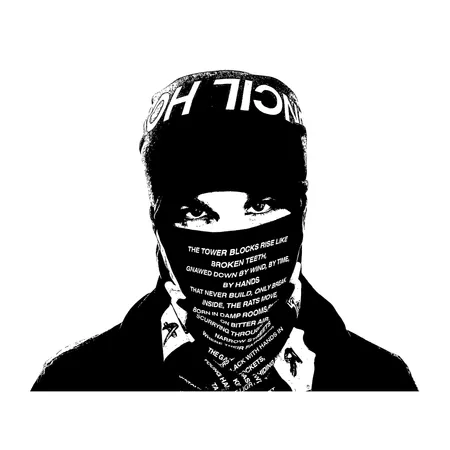
Visually, EsDeeKid’s world is as controlled as his sound. The balaclava is not simply a tool for anonymity but a core part of his art direction. Dark palettes, grainy textures, blurred motion, and nocturnal urban landscapes dominate his visuals, turning him into a silhouette rather than a celebrity. In doing so, he joins a lineage of masked figures like MF DOOM, reframed for an era shaped by surveillance, algorithms, and relentless personal branding. In that context, anonymity becomes a form of resistance. Despite his refusal to be seen, EsDeeKid has quietly shaped fashion culture, blending UK streetwear with understated luxury worn without emphasis. There are no loud endorsements or obvious brand deals; fans replicate the look not to imitate a star but to participate in the anonymity itself. At live shows, masked crowds transform concerts into collective experiences rather than traditional displays of idol worship.
Those performances are deliberately stripped back. Lighting remains low, visuals stay abstract, and interaction is minimal. Without facial expressions or personal storytelling, the focus shifts entirely to sound and physical presence. Bass becomes something felt in the chest rather than simply heard, and lyrics echo through darkened rooms instead of being explained. The absence of personality paradoxically intensifies the experience, forcing audiences to project their own emotions onto the music.
Inevitably, the mystery surrounding EsDeeKid has fuelled speculation, most infamously the internet theory that actor Timothée Chalamet might secretly be behind the mask. The rumour mattered less for its plausibility than for what it revealed about cultural fascination with hidden identities. By leaning into the absurdity rather than shutting it down—ultimately even collaborating musically—the line between satire and reality blurred further, reinforcing the idea that EsDeeKid’s identity matters less than the conversation his anonymity generates.
Criticism has followed. Some argue that the mystery functions as marketing, that the lyrics lack depth, or that the sound leans too heavily on atmosphere. Others question whether anonymity can sustain a long-term career. But these critiques often miss the point. EsDeeKid is not trying to be relatable or transparent. He is documenting a mood—detachment, indulgence, alienation—that resonates with a generation shaped by digital overload and economic pressure. In a culture addicted to access, refusal creates value. Ultimately, EsDeeKid matters because he represents a shift in how artists can exist. He prioritizes music over personality, atmosphere over confession, and presence without exposure. Whether he ever unmasks is almost irrelevant. His influence is already visible in a new wave of artists who value sound, mood, and intentional distance over constant self-disclosure.
Written by: @Arriv3r
Edited by: @Arriv3r
Insight.


